
GEOChecker
What is GEO?
GEO helps a brand and website become easier for AI search systems and assistants to discover, understand, and reference.
The short version
GEO, or Generative Engine Optimization, is the work of making a brand, product, and website easier for AI search experiences to discover, understand, verify, and reference. Traditional SEO often ends with a ranked list and a click. AI search often turns several sources into an answer, so the site has to be clear enough to become a trustworthy source for that answer.
How it differs from SEO
SEO work still matters: crawl access, indexable pages, useful content, internal links, and clear metadata are part of the foundation. GEO adds another question: if an AI answer system reads this page, can it identify the brand, extract a direct answer, verify the claim, and understand when the claim applies?
Bing made AI citations observable
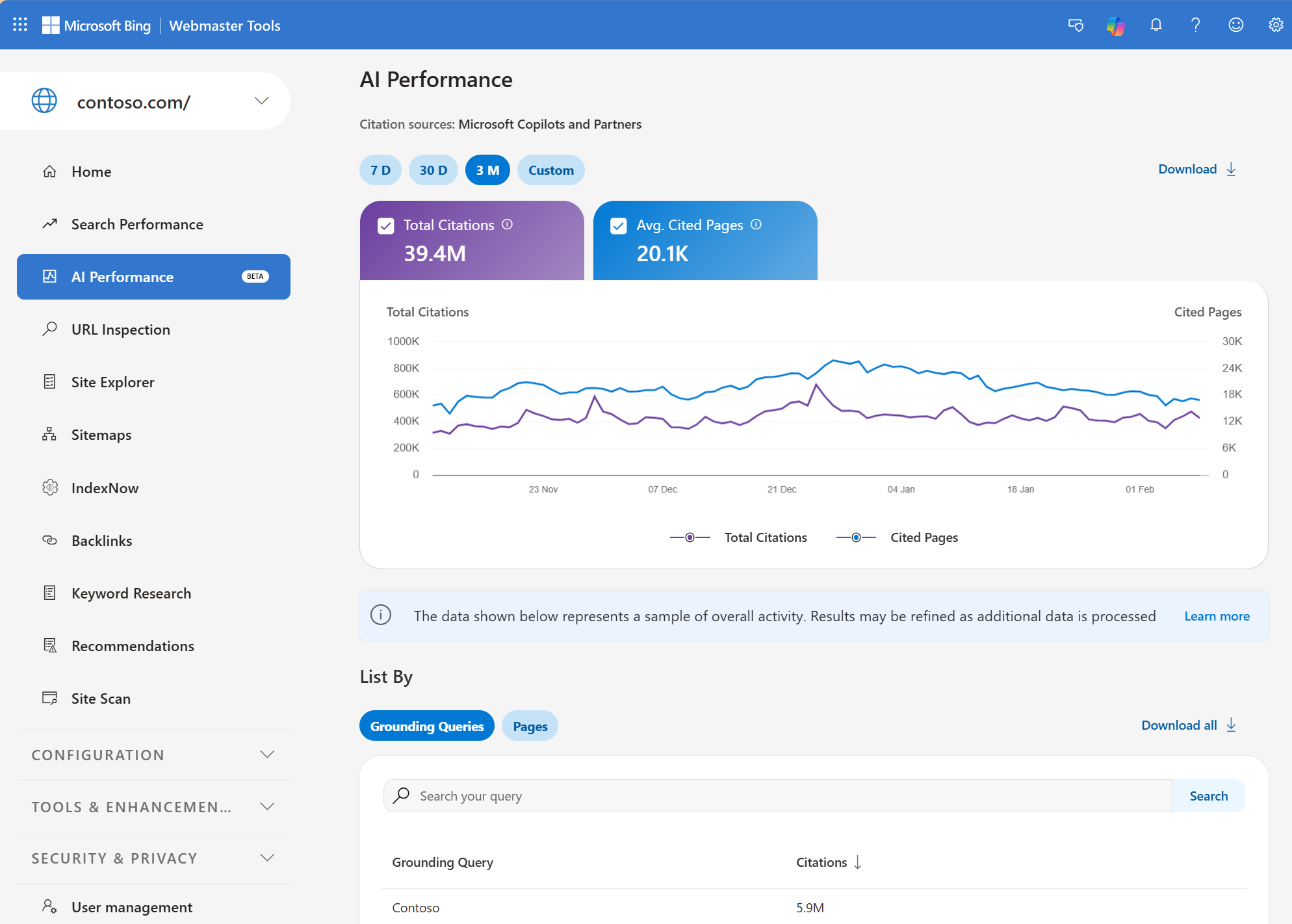
In February 2026, Bing introduced AI Performance in Bing Webmaster Tools public preview. The important shift is not that citations became controllable; it is that publishers can begin observing AI answer visibility separately from traditional blue-link search performance.
- Total Citations shows how often a site is displayed as a source in supported AI-generated answers during a selected time frame.
- Average Cited Pages shows the average number of unique site pages displayed as AI answer sources per day.
- Grounding queries show sampled phrases used when AI systems retrieved content that was later cited.
- Page-level citation activity shows which URLs were cited, while the trend line shows how citation activity changes over time.
- Bing states that content owner preferences expressed through robots.txt and supported controls are respected.
Bing also expanded AI visibility reporting
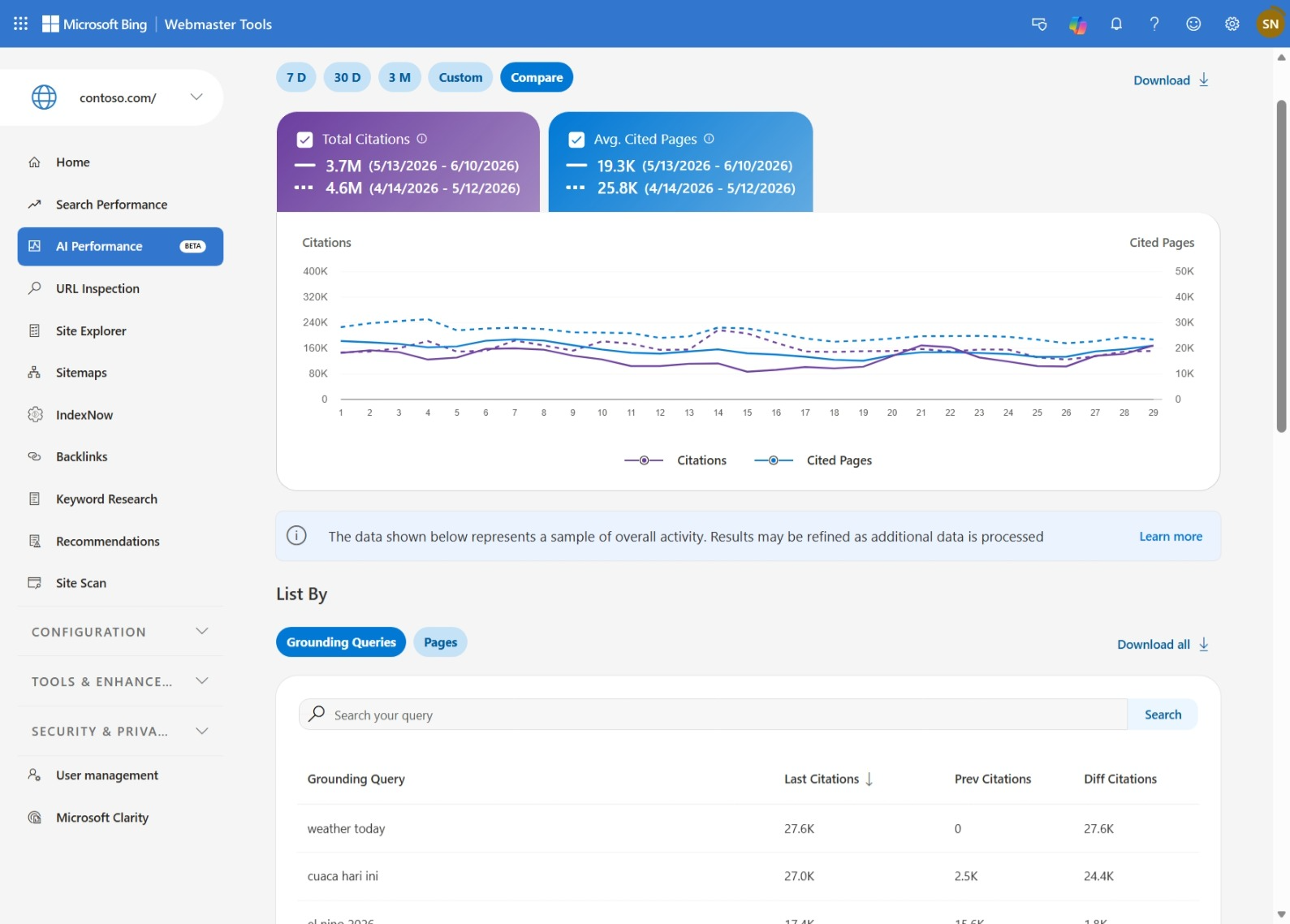
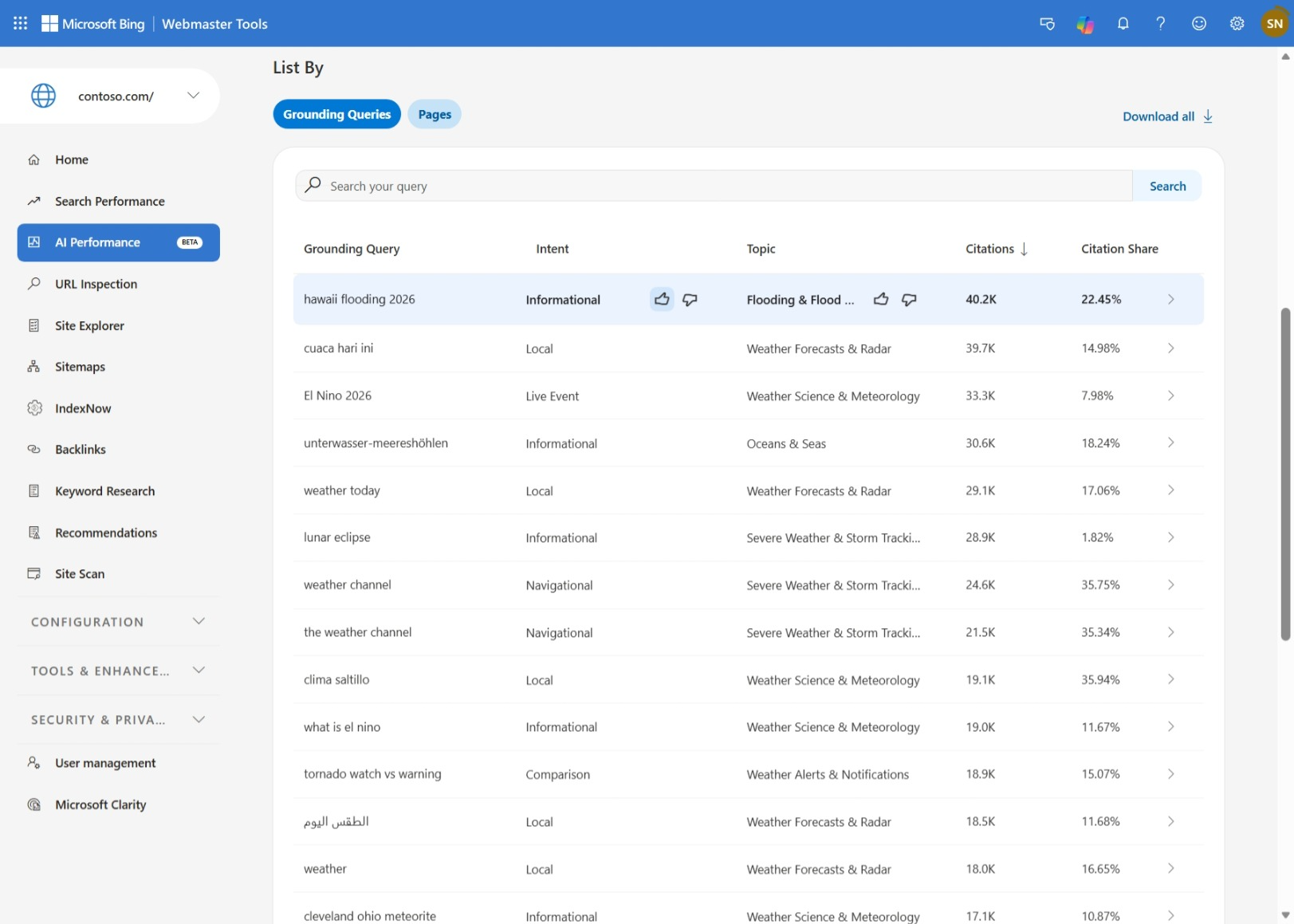
In June 2026, Bing announced preview reports for Intents, Topics, Citation Share, and Compare. These reports matter because they treat AI visibility as contextual and changing, not as one fixed rank.
- Intents classifies grounding queries into broader categories such as informational, commercial, navigational, local, research, creation, learn, and solve.
- Topics groups related grounding queries into broader thematic clusters, closer to how content teams plan subject coverage.
- Citation Share estimates the percentage of citations attributed to a site for a specific grounding query across all cited sites, but Bing frames it as observational rather than a ranking system or competitive scoreboard.
- Compare overlays a previous date range on the current reporting view, making changes easier to inspect after content updates, seasonality, demand shifts, or broader ecosystem changes.
What this means for GEO work
These Bing reports support a practical definition of GEO: improve the public signals that help AI systems find, interpret, and cite a site, then measure platform outcomes separately when reliable data exists. A readiness checker does not pretend to know private AI rankings; it inspects crawlability, entity clarity, answer-ready content, evidence, trust pages, schema, and source controls.
Why it matters now
A company can have a useful website and still be difficult for AI systems to interpret if the entity is unclear, the facts are vague, the content is hidden behind JavaScript, or trust pages are missing. GEO work reduces that ambiguity with crawlable pages, direct answers, verifiable facts, consistent entity signals, and structured data.
No shortcut claims
GEOChecker does not claim it can guarantee placement in ChatGPT, Google AI features, Perplexity, Gemini, Copilot, or any answer system. The right promise is narrower and more useful: improve the public signals that help AI systems discover, understand, and reference a website.